· 7 min read
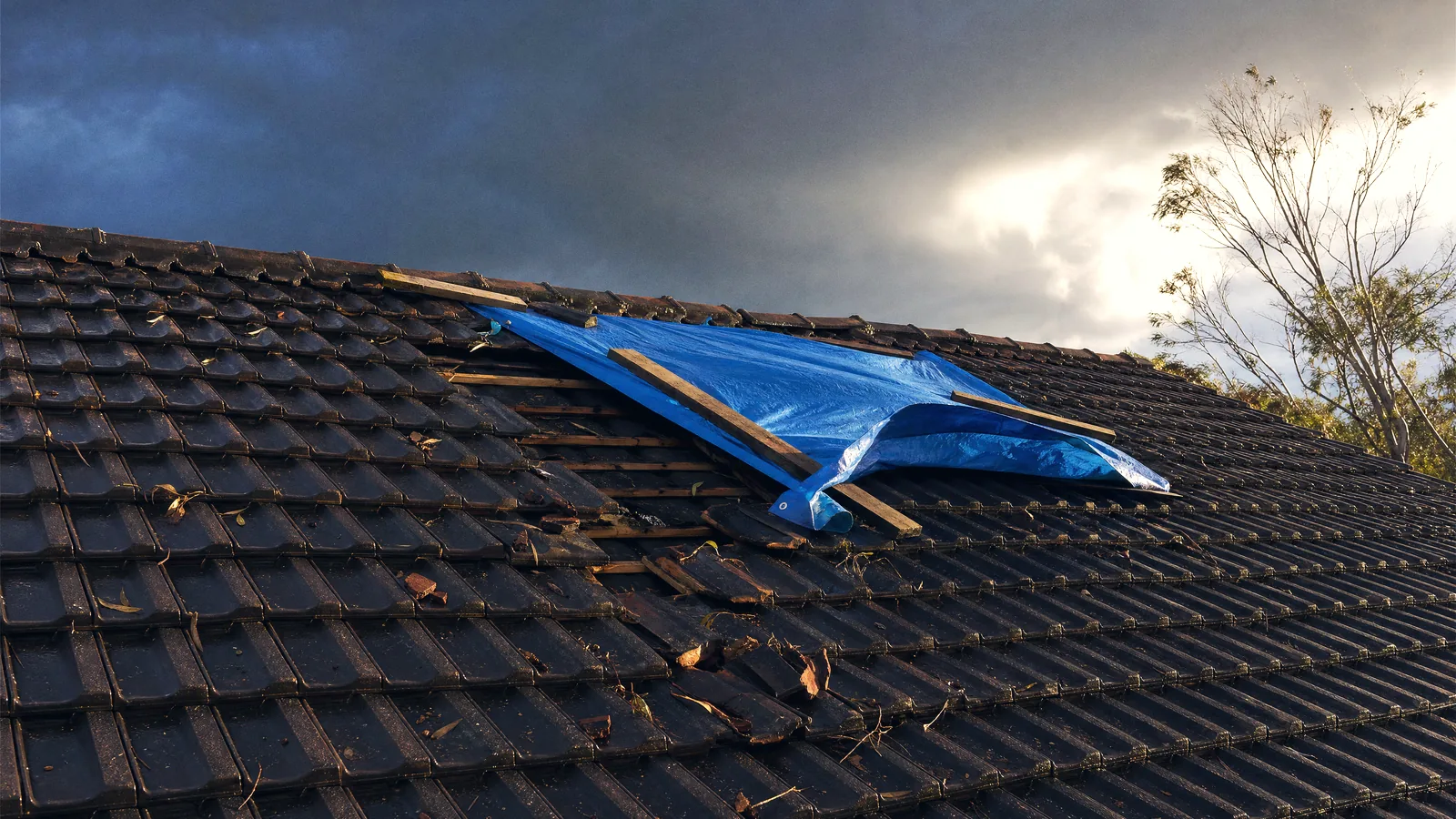
A southerly comes through, and by the morning there are tiles on the lawn and a wet patch on the ceiling. What you do in the first hour affects how bad the damage gets, and what you do in the first day affects how straightforward your insurer is about it. Neither is complicated, but both are easy to get wrong while you are standing there looking at it.
First, make it safe
Before anything else, and before anyone climbs anywhere. Most of the injuries that come out of storm damage happen in the clean-up rather than in the storm.
- Treat water near anything electrical as an electrical hazard. If it is running near lights, a fan or the switchboard, turn that circuit off at the board and do not touch the fitting.
- Stay out from under a sagging or bulging ceiling. That bulge is water pooling above plasterboard, and it comes down all at once.
- Contain what you can from below. A container under a drip, valuables moved, carpet lifted if it is easy. That is genuinely useful and it is as far as it needs to go.
- Do not get on the roof. A wet roof after a storm is the single worst surface to walk, tiles are loose in places you cannot see, and this is the part to leave to someone harnessed.
- If a power line is down or touching the roof, stay well clear and call the electricity distributor, not us.
Most of the injuries that come out of storm damage happen in the clean-up rather than in the storm.
Photograph it before anyone fixes anything
This is the step people skip, and it is the one that costs them. Once a roof has been made watertight the evidence of what happened is gone, and a temporary repair done in good faith can make a claim harder to substantiate than it needed to be.
You do not need to be thorough or technical. You need the damage to exist in photographs with a date on them, from the ground, before anything changes.
- Wide shots of the house from a few angles, so the roof is visible in context.
- Close shots of anything obviously displaced: tiles on the ground, a lifted sheet, a gutter pulled away, a branch on the roof.
- The inside damage as well. Ceiling stains, wet insulation, anything in the room below.
- Keep the branch, the broken tile, the piece of flashing. Physical evidence is worth more than a photograph of it.
- Note the date and roughly when it happened. Policies generally turn on a sudden event, so when it occurred matters.
What policies generally cover, and what they generally do not
This is general information rather than advice about your policy, and the only document that answers the question for your house is your own product disclosure statement. Read it, or ring your insurer and ask them directly. What follows is the pattern we see rather than a rule.
The broad distinction insurers draw is between sudden damage and gradual deterioration. A storm lifting sound tiles off a sound roof is an event. A roof that has been quietly failing for six years and finally let water through in heavy rain is generally treated as maintenance, and maintenance is usually excluded.
- Often covered: tiles or sheeting displaced by wind, impact damage from a fallen branch, and water damage inside that follows directly from that event.
- Often argued about: whether the roof was in sound condition beforehand. This is where your own maintenance history does the work, and where photographs from a previous inspection are worth having.
- Generally not covered: wear, rust, perished pointing, lack of maintenance, and damage that has clearly been developing over time.
- Frequently missed: the gutters and downpipes. Storm damage to rainwater goods is real damage and worth including rather than mentioning only the roof.
- Check the excess against the likely repair cost before you lodge anything. On a small repair the excess can exceed the job.
The broad distinction insurers draw is between sudden damage and gradual deterioration.
Where a roofer fits in
To be plain about what we do and do not do here, because the difference matters and some operators are vague about it.
We will come and look at the roof, get on it safely, and photograph and document what we find. We will make it watertight where that can be done safely. We will quote the repair in writing, itemised, in a form you can hand straight to your insurer.
What we will not do is handle your claim, act for you with your insurer, or tell you what your policy covers. That is not roofing and we are not licensed for it. Anyone offering to manage the claim for you in exchange for the work is worth a second look.
- We document the damage. You or your insurer decide what happens with it.
- We quote the work in writing, so the number in your claim is a real number rather than an estimate.
- If the honest answer is that the roof was already at the end of its life and the storm only finished it, we will say so. That is unwelcome news, and it is better heard from us than discovered by an assessor.
After it is fixed
Keep everything. The photographs, the quote, the invoice and the report. A documented repair history is the single most useful thing you can have the next time a storm comes through, because it answers the question insurers ask hardest, which is what condition the roof was in before.
It is also worth using the inspection for more than the storm. A roofer already on your roof for one reason may as well tell you about the pointing, the valleys and the gutters while they are up there, and that costs nothing extra.