Most roof repairs fail because the wrong thing got fixed
Water does not fall straight down once it is inside a roof. It runs along a batten, follows a rafter, tracks across the sarking and drops through the ceiling somewhere else entirely. So the stain on your ceiling is a clue about where the water came out, not where it got in. Sealing the tile directly above it is the single most common wasted repair we get called out to redo.
A repair starts with finding the actual entry point, which usually means walking the whole roof rather than the one section you pointed at, and getting into the roof space to look at the underside. Once we know what failed, the fix itself is often small and cheap. It is the diagnosis that is worth paying for.
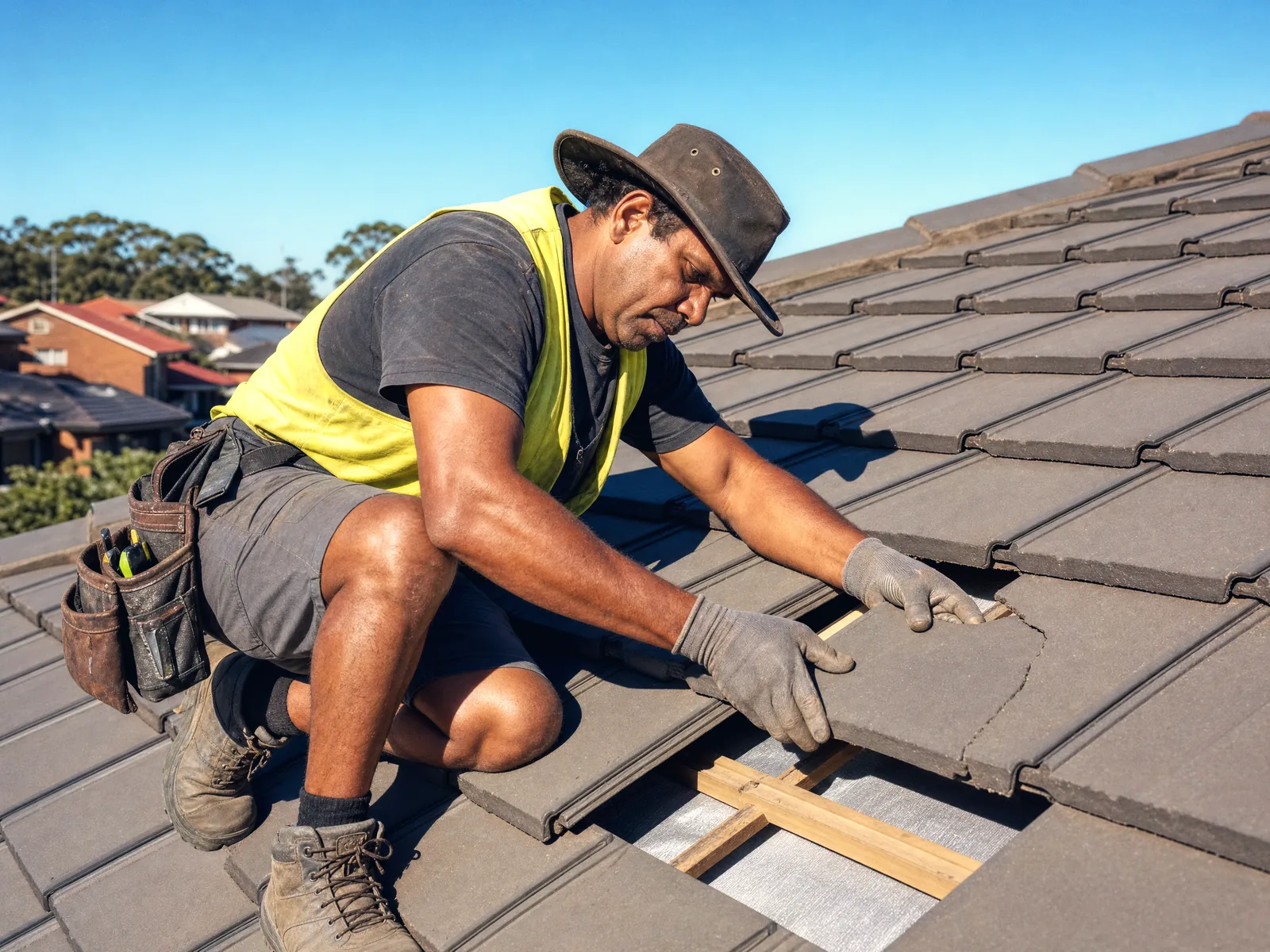
How we do it
Walk the whole roof
Not just the section above the stain. Photographed as we go, and you keep the photos whether you use us or not.
Look from inside the roof
The roof space tells you things the surface will not: wet battens, stained sarking, daylight where there should not be any.
Price the repair in writing
What failed, what it takes to fix, and whether anything else is close behind it. No verbal numbers.
Carry out the repair work
Matched materials where we can, including sourcing second-hand tiles for older profiles that are no longer made.
Test and photograph
Water on it where that makes sense, then photos of the finished work so you can see what you paid for.
A repair usually makes sense when
- The problem is in one identifiable place rather than several
- The rest of the roof is in reasonable condition for its age
- Tiles or sheeting are sound and it is the pointing, flashing or a valley that has failed
- The roof has plenty of life left and you are fixing a fault, not the whole surface
- You are dealing with storm damage on an otherwise healthy roof
When a repair is only buying time
- You have had the same roof patched two or three times already
- Leaks are appearing in different places each time it rains hard
- Battens or sarking are wet, soft or rotted
- The surface is porous or the sheeting is corroded through across the roof
At that point the repair money is better put toward a restoration or a replacement, and we would rather say so up front than keep coming back.
What do roof repairs cost in Newcastle?
Small repairs are genuinely small. Replacing a handful of cracked tiles or re-pointing a short run of ridge capping generally lands in the low hundreds. Re-bedding and re-pointing all the ridge capping on a whole roof is a bigger piece of work and moves into the low thousands, because it is effectively rebuilding the mortar bed under every cap.
Valley iron replacement, flashing and box gutter work sit between the two, and the number is driven mostly by access and length rather than by the part itself. A valley in the middle of a steep two-storey roof costs more to get to than to fix.
The honest caveat: nobody can price a repair properly without seeing it, because the visible symptom and the actual fault are often two different jobs. We inspect and quote in writing before any work starts, so you can decide with the number in front of you.
Repairs on the coast and around the lake
Salt air changes which parts fail first. From Stockton and Merewether down through Redhead, Belmont and Swansea, the things we replace most often are metal: valley irons, flashings, gutter brackets and fasteners, usually well before the tiles themselves are a problem. Inland around Cardiff and Toronto it is more often mortar and tree litter. It is worth asking any roofer quoting your job which of the two they think they are dealing with, because it changes what gets replaced and what materials should go back on.
Common questions
How do I know where my roof is actually leaking?
Usually you cannot tell from inside, and the ceiling stain is misleading more often than not. Water runs along timber and sarking before it drops. Finding the entry point takes a look at the roof surface and the roof space together, which is what the inspection is for.
Can you repair just one or two broken tiles?
Yes, and it is a common job. The only complication is matching the profile on older roofs, where the original tile is no longer manufactured. In that case we source second-hand tiles rather than putting a mismatched one on.
Is it worth repairing an old roof or should I replace it?
It depends on what is under the surface. If the battens and sarking are sound and the fault is in one place, repair. If the structure underneath has gone or you are patching the same roof repeatedly, the repair money is being wasted. We check that at the inspection and tell you which one you are looking at.
Do you repair metal roofs as well as tile?
Yes. Metal roof faults are usually different: corroded sheeting, failed fasteners, split flashing or a blocked box gutter rather than cracked tiles. Some of that is roof plumbing work, which is a separate licensed trade and something we cover.
Will my insurance cover a roof repair?
Sudden storm damage is often covered, while gradual wear and deterioration generally is not. We quote the work and document the damage with photos so you have something to give your insurer. Whether it is covered is between you and them.
Related services
A stain on the ceiling or a drip during last night's rain. Call us and we will come and look at it, find where the water is actually getting in, and make it safe.
Learn morePressure clean, re-bed and re-point the ridge capping, replace broken tiles, then a coating system. Typically buys another 10 to 15 years out of a sound tile roof.
Learn moreConcrete and terracotta tile work: broken tiles, slipped tiles, cracked pointing and tired ridge capping.
Learn more
Thinking about roof repairs?
We will come and look at the roof, photograph what we find and put a price in writing. Free, across Newcastle, Lake Macquarie and the Hunter.